[[key]]
- In an atomic transaction, the asset and payment move in one indivisible transaction, so either both settle at once or neither does, eliminating counterparty risk.
- Traditional T+2/T+1 settlement locks up capital in collateral, keeps risk open for days, and requires costly manual reconciliation.
- Regulated stablecoins enable atomic settlement by providing the fast, final, and compliant on-chain cash leg it depends on.
- Major institutions are already building it, including JPMorgan's JPM Coin, MAS Project Guardian, and BIS Project Agora.
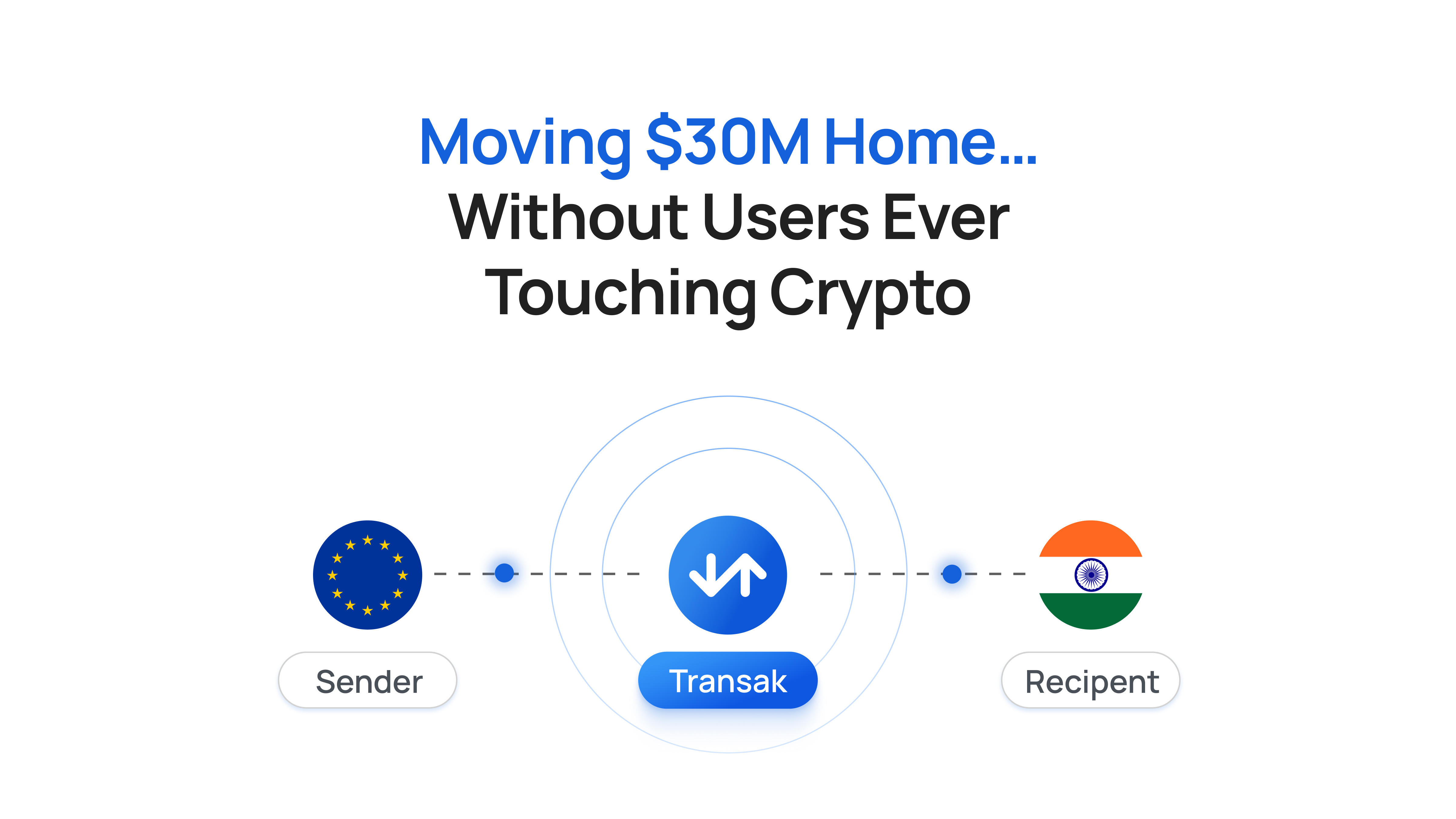
- Transak closes the cash-leg gap with compliant fiat-to-stablecoin conversion across 64 countries through a single API.
[[/key]]
Traditional financial settlement is slow by design. A stock trade executed on Monday does not legally change hands until Wednesday. That 48-hour gap is a liability that locks billions of dollars in collateral and invites risks and inefficiencies.
Atomic settlement eliminates that gap. Both legs of a transaction, the asset and the payment, move in a single operation. Either both settle or neither does. There is no in-between. No waiting. No window where one party has delivered and the other has not paid.