[[key]]
Stablecoin Market Cap in 2026: The Numbers Behind the Growth
Jul 18, 2026, 1:00:00 PM / by Sankrit K.
[REPORT] The Q2 2026 Compliance Cliff: What Every Payments Company Needs to Know Before July
Jun 30, 2026, 11:47:18 AM / by Sankrit K.
Why This Report Exists
Three regulatory deadlines converge in July 2026. Together, they will define which companies can move money on stablecoin rails and which cannot.
How Do Stablecoin Issuers Make Money? The Economics of USDT and USDC
Jun 26, 2026, 1:49:13 AM / by Sankrit K.
[[key]]
SWIFT vs Ripple vs Stablecoins: Who Wins Cross-Border Settlement?
Jun 23, 2026, 2:00:00 PM / by Sankrit K.
[[key]]
What Are Real-Time Payments? RTP, FedNow and Stablecoins Compared
Jun 22, 2026, 6:05:51 PM / by Sankrit K.
[[key]]
Which Banks Are Using Stablecoins in 2026? From JPMorgan to BofA
Jun 16, 2026, 2:15:00 PM / by Sankrit K.
[[Key]]
Visa and Mastercard Stablecoin Settlement: What It Means for Payments
Jun 13, 2026, 2:45:00 PM / by Sankrit K.
[[key]]
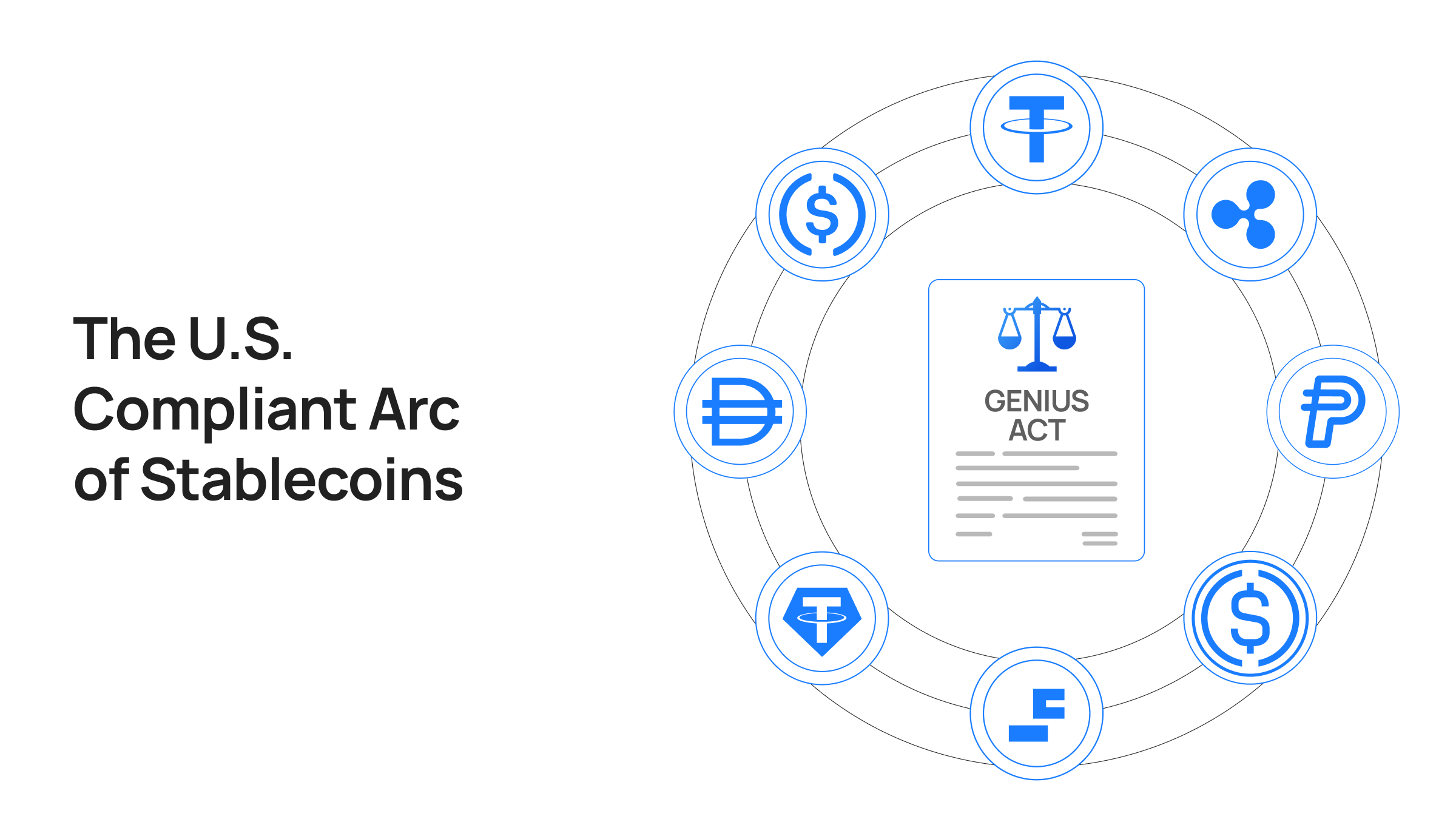
What Is a Payment Stablecoin? The GENIUS Act Definition Explained
Jun 12, 2026, 5:00:00 PM / by Sankrit K.
[[key]]
A Field Guide to Stablecoin Corridors: Where the Money Actually Moves in 2026
Jun 8, 2026, 7:14:36 PM / by Sankrit K.
[[key]]
What Is Atomic Settlement? How Stablecoins Are Killing T+2
May 25, 2026, 2:59:57 PM / by Sankrit K.
[[key]]
- In an atomic transaction, the asset and payment move in one indivisible transaction, so either both settle at once or neither does, eliminating counterparty risk.
- Traditional T+2/T+1 settlement locks up capital in collateral, keeps risk open for days, and requires costly manual reconciliation.
- Regulated stablecoins enable atomic settlement by providing the fast, final, and compliant on-chain cash leg it depends on.
- Major institutions are already building it, including JPMorgan's JPM Coin, MAS Project Guardian, and BIS Project Agora.
- Transak closes the cash-leg gap with compliant fiat-to-stablecoin conversion across 64 countries through a single API.
[[/key]]
Traditional financial settlement is slow by design. A stock trade executed on Monday does not legally change hands until Wednesday. That 48-hour gap is a liability that locks billions of dollars in collateral and invites risks and inefficiencies.
Atomic settlement eliminates that gap. Both legs of a transaction, the asset and the payment, move in a single operation. Either both settle or neither does. There is no in-between. No waiting. No window where one party has delivered and the other has not paid.